
The ICNR2026 program will include plenary lectures given by world-class scientists in the field of neurorehabilitation, as well as special sessions, poster and exhibitor sessions, and pre-conference workshops. The program will aim at enriching the knowledge of the participants, widening their point of view on specific topics related to neurorehabilitation, and getting in closer contact with experts in this field.
Please subscribe to our ICNR mailing list to be alerted!
Plenary Speakers
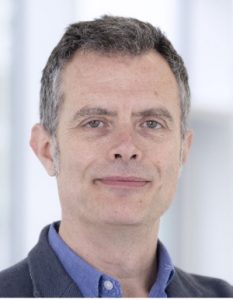
Friedrich-Alexander-Universität Erlangen-Nürnberg, Germany
Claudio Castellini is a researcher in medical robotics, focussing on rehabilitation and assistive robotics, human-machine interfaces and interaction, and applied machine learning. After obtaining a degree in Biomedical Engineering in 1998 at the University of Genoa, Italy, he obtained a Ph.D. in Artificial Intelligence (Mathematical Logic) at the School of Informatics of the University of Edinburgh, Scotland, in 2005. Soon after, he turned his attention to robotics for the disabled, spending 4.5 years as a post-doctoral fellow at the Advanced Robotics Laboratory of the University of Genoa, Italy. In 2009, he was hired at the German Aerospace Centre where, as of now, he is a senior researcher and joint lab leader at the Institute of Robotics and Mechatronics. In 2021 he has been appointed full professor of medical robotics at the University of Erlangen-Nuremberg where he leads the Assistive Intelligent Robotics (AIROB) Lab and enjoys being the Deputy Dean for Public Relations and Communication of the Faculty of Engineering. As of now, he has co-authored about 160 scientific papers, he is involved in a few research projects at the Bavarian, German, and European levels, and serves as Associate Editor for the IEEE Transactions on Neural Systems and Rehabilitation Engineering, as a board member for the International Consortium for Rehabilitation Robotics (ICORR), as the organiser of the ICORR YouTube Channel and as an Editor / Associate Editor for BioRob, ICNR, and the RehabWeek.
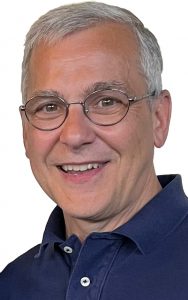
B.J. Fregly received his Bachelor’s degree from Princeton University (1986) and his Masters and Ph.D. degrees from Stanford University (1987 and 1993) in Mechanical Engineering. Following a year of post-doctoral research at the University of Lyon in France (1993-1994), Dr. Fregly worked as a software developer in Silicon Valley for Rasna/Parametric Technology Corporation (1995-1999). From 1999 to 2017, he served on the faculty of the Department of Mechanical & Aerospace Engineering at the University of Florida, where he was a Knox T. Millsaps Professor, a University of Florida Research Foundation Professor, and the recipient of department and college Teacher of the Year awards. In August of 2017, Dr. Fregly joined the Department of Mechanical Engineering at Rice University as a Professor and CPRIT Scholar in Cancer Research. His research focuses on modeling, simulation, and optimization of the human neuromusculoskeletal system with the goal of designing highly effective personalized treatments for movement impairments. To date, the three primary clinical application areas have been stroke, osteoarthritis, and pelvic cancer. Dr. Fregly has been the PI on over $13 million in research funding primarily from the National Science Foundation (including a CAREER Award), the National Institutes of Health, and the Cancer Prevention and Research Institute of Texas. Most recently, Dr. Fregly has directed the development of the Neuromusculoskeletal Modeling Pipeline (https://nmsm.rice.edu), which is Matlab-based software that adds model personalization and treatment optimization functionality to OpenSim. At Rice, Dr. Fregly has also served as a magister overseeing Brown College, a residential housing community of approximately 400 undergraduate students.
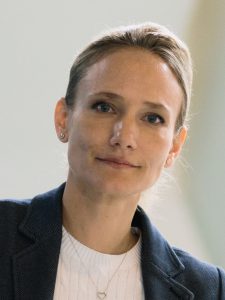
Ursula Hofstoetter is a neuroscientist and biomedical engineer specializing in human spinal cord physiology, motor control, and neuromodulation, with a particular focus on rehabilitation after spinal cord injury. She co-heads the Human Motor Control and Neuromodulation research group at the Medical University of Vienna, where her work bridges fundamental neuroscience, clinical research, and the conception of accessible neurorehabilitation regimens. Ursula Hofstoetter obtained her Ph.D. in Technical Mathematics from the Vienna University of Technology and has since focused on elucidating the functional organization of human spinal locomotor circuits and their modulation through invasive and non-invasive stimulation techniques. Her research aims to develop and translate innovative neuromodulation strategies to improve motor function and reduce spasticity in individuals with spinal cord injury and other neurological disorders. She has led and contributed to numerous national and international research projects, supervised students across disciplines, and maintains an established track record of high-impact publications. Her work has received international recognition, including the DSQ Research Award for outstanding contributions to spinal cord movement control and rehabilitation.
 He (Helen) Huang, Ph.D.
Dr. Helen Huang is the Jackson Family Distinguished Professor in the Joint Department of Biomedical Engineering at North Carolina State University (NC State) and the University of North Carolina at Chapel Hill (UNC) and the Director of the Closed-Loop Engineering for Advanced Rehabilitation (CLEAR) core. Her research interests lie in neural-machine interfaces, wearable robotics (robotic prosthetics and exoskeletons), learning-based wearable robot control, wearer-robot interaction and co-adaptation, and human motor control/biomechanics. She was a recipient of the Delsys Prize for Innovation in Electromyography, NIDILRR Switzer Fellowship, NSF CAREER Award, ASA Statistics in Physical Engineering Sciences Award, and NC State ALCOA Foundation Distinguished Engineering Research Award. She is a Fellow of AIMBE, a Fellow of IEEE, and a NC State faculty scholar. She is currently the Editor-in-Chief for the IEEE Transactions on Neural Systems and Rehabilitation Engineering and an Editorial Board Member for IEEE Transactions on Biomedical Engineering.
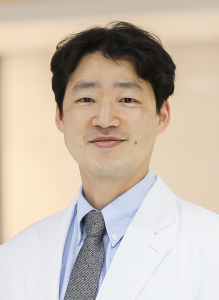 Byung-Mo Oh, MD, PhD
Byung-Mo Oh, MD, PhD is a Clinical Professor and Chair of the Department of Rehabilitation Medicine at Seoul National University Hospital and Seoul National University College of Medicine in Seoul, Republic of Korea. He is a board-certified physiatrist with extensive clinical and research expertise in neurorehabilitation, with particular emphasis on traumatic brain injury, concussion, and dysphagia. His research interests span blood-based biomarkers for TBI prognostication, swallowing biomechanics, and technology-assisted rehabilitation, including robotics and artificial intelligence–driven diagnostic and therapeutic tools. Dr. Oh has also conducted multiple studies on brain–computer interface–based rehabilitation systems for individuals with severe physical disabilities. He currently serves as Editor-in-Chief of Annals of Rehabilitation Medicine and as Associate Editor of several international journals, including Dysphagia and PM&R. Through national and industry-funded research projects and active international collaboration, he continues to contribute to the advancement of global neurorehabilitation research and education.
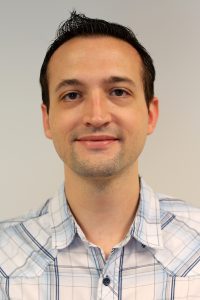
Aaron Young is an Associate Professor and Woodruff Faculty Fellow in the Woodruff School of Mechanical Engineering at Georgia Tech and has directed the Exoskeleton and Prosthetic Intelligent Controls (EPIC) lab since 2016. Dr. Young received his MS and PhD degrees in Biomedical Engineering with a focus on neural and rehabilitation engineering from Northwestern University in 2011 and 2014 respectively. He received a BS degree in Biomedical Engineering from Purdue University in 2009. He also completed a post-doctoral fellowship at the University of Michigan in the Human Neuromechanics Lab working with lower limb exoskeletons and powered orthoses to augment human performance. His research area is in advanced control systems for robotic prosthetic and exoskeleton systems for humans with movement impairment. He combines machine learning, robotics, human biomechanics, and control systems to design wearable robots to improve the community mobility of individuals with walking disability. He has received an NIH New Innovator Award (DP2), NIH NCMRR New Investigator award and IEEE New Faces of Engineering award, and his EPIC lab group won the International VIP Consortium Innovation Competition. He is a Senior Member of the IEEE and serves as an Editor / Associate Editor for BioRob and Rehab Week/ICORR.
Join us in South Korea for ICNR2026!
Sign up to our mailing list here to receive updates.